
What Is Raw Honey? Raw vs Supermarket Honey, Explained
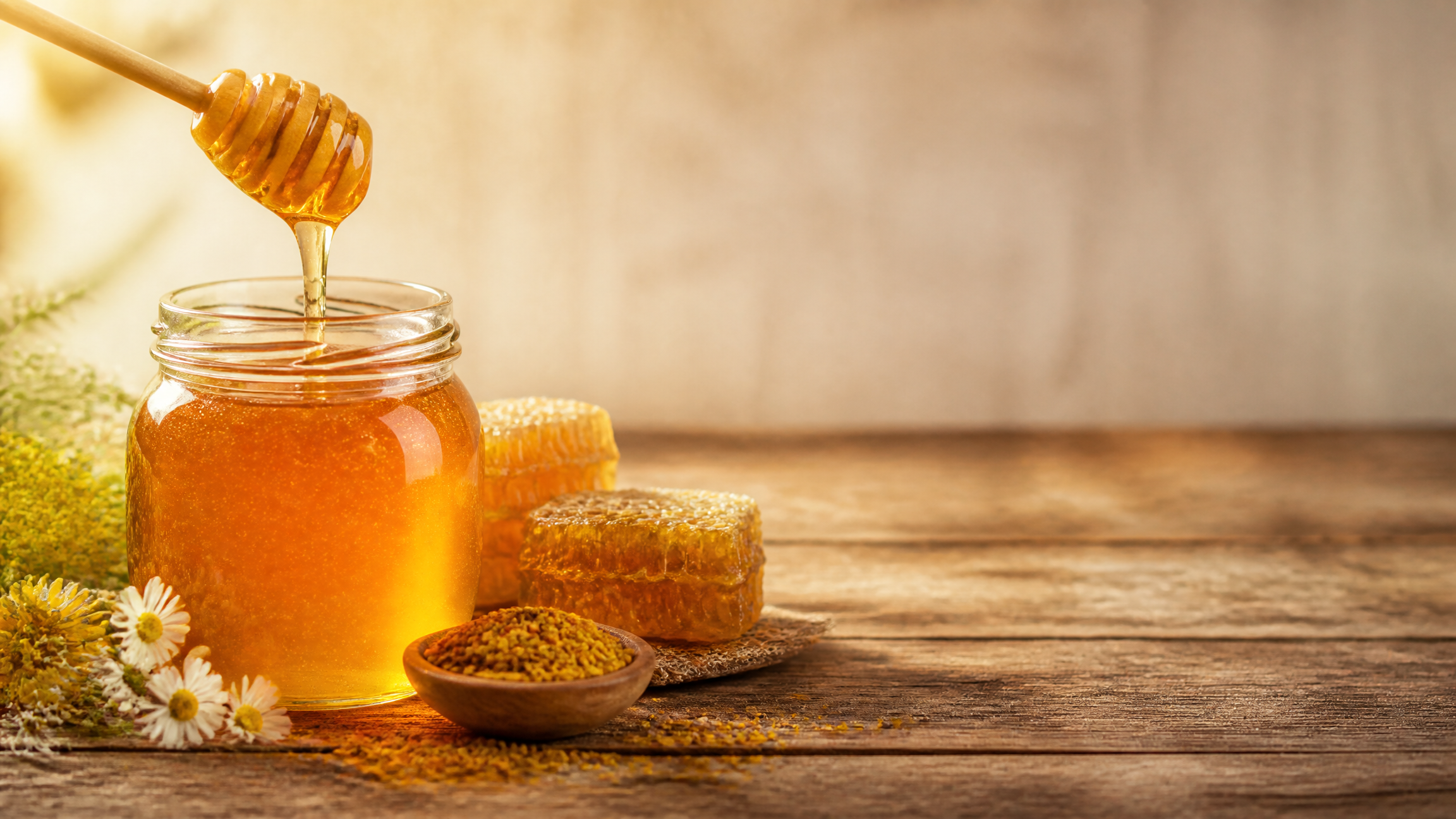
Not all honey is created equal.
Discover what makes honey truly raw, how it differs from the supermarket jars and why it matters for what ends up on your spoon.
Walk down any supermarket aisle and you'll find shelves of golden jars all labelled "honey." But here's something most people don't realise: a lot of it barely resembles what the bees actually made.
At Art of the Hive, we're a family-run beekeeping company with hives in the gardens of Sydney and across our 200-acre farm in Mudgee, NSW. We spend our days with bees, so the difference between raw honey and the processed stuff on supermarket shelves is something we care about deeply. Here's what it actually means, and why it matters for what ends up on your spoon.
So, what is raw honey?
Raw honey is honey exactly as the bees made it. It's taken straight from the hive, gently strained to remove bits of wax and the occasional bee leg, and poured into the jar. That's it. No heating, no harsh filtering, no blending with anything else.
Because it's never overheated, raw honey keeps everything nature put in it:
Natural enzymes the bees add as they turn nectar into honey
Pollen, which carries the unique fingerprint of the flowers it came from
Antioxidants and trace nutrients
The real flavour and aroma of the landscape — which is why our wildflower honey tastes a little different from one harvest to the next
In short: raw honey is a living, natural food. It hasn't been stripped back to just sweetness.
How supermarket honey is different
Most mass-produced honey goes through a very different journey before it reaches the jar. Typically it's:
Heated (pasteurised) to high temperatures so it pours easily and resists crystallising on the shelf — but that heat destroys many of the delicate enzymes and aromas.
Ultra-filtered to make it look perfectly clear and uniform, which also strips out the natural pollen.
Blended from many sources and countries, so you've no idea where it's actually from.
The result is a product that's consistent, cheap, and shelf-stable — but a long way from what the bees originally produced. At its worst, some commercial honey has even been found watered down with cheap sugar syrups.
None of that processing is about making the honey better. It's about making it look uniform and last longer on a shelf.
How to spot the real thing
Once you know what to look for, raw honey is easy to recognise:
It crystallises. Over time, raw honey naturally turns thick, grainy or solid. This is a good sign — it means it hasn't been heat-treated. (A quick stand in warm water brings it back to liquid.)
It's often cloudy, not glass-clear, because the natural pollen is still in there.
It varies. Colour and flavour change with the season and the flowers. Perfectly identical jars, year-round, usually mean heavy processing.
The label says so. Look for "raw," "unprocessed," or "unpasteurised," and ideally a single, traceable source rather than a vague "blend of honeys."
Why we do it the slow way
We could heat and filter our honey to make it cheaper and more uniform but we'd be throwing away the very thing that makes it special.
Our bees forage freely on wildflowers and are never fed sugar to boost output. Each batch is harvested in small quantities and jarred raw, so what you taste is genuinely the flavour of a particular patch of Australia at a particular time of year. It's honey with a sense of place — and that's exactly the point.
That's also why we sometimes sell out: real, small-batch raw honey simply can't be produced at supermarket scale.
How to enjoy raw honey
A simple rule: try not to overheat it. The same gentle enzymes that make raw honey special don't love high heat, so:
For dressings, drinks, and drizzling, stir it in off the heat to keep all its character.
It's delicious straight off the spoon, swirled through yoghurt, spread on warm toast, or stirred into tea once it's cooled slightly.
When you bake or glaze with it, you'll trade a little of that rawness for gorgeous caramel flavour — both are wonderful, it just helps to know the difference.
Looking for inspiration? Our honey recipes range from a classic honey garlic chicken to a honey-sweetened tiramisu, all built around real raw honey.
(One important note: never give honey to infants under 12 months, as it can pose a risk of botulism to babies.)
The bottom line
"Honey" on a label doesn't always mean what you'd expect. Raw honey is the real, unprocessed version — full of natural enzymes, pollen, antioxidants and genuine flavour, exactly as the bees intended. Supermarket honey is often heated, filtered and blended into something far more generic.
Once you've tasted the difference, it's hard to go back.
If you'd like to try genuine, small-batch raw honey from our own Mudgee and Sydney hives, take a look at our raw honey in the shop. And because each harvest is limited, it's worth joining The Hive — our free list — so you're first to know when a fresh batch lands (and you'll get our free Honey Recipe Collection while you're there).
From our hive to your kitchen, Diana & the bees at Art of the Hive 🐝